
NAICS Codes for Handmade Businesses: Schedule C Activity Codes Updated for 2026
- Benchmark Ledger Solutions

- 3 days ago
- 11 min read
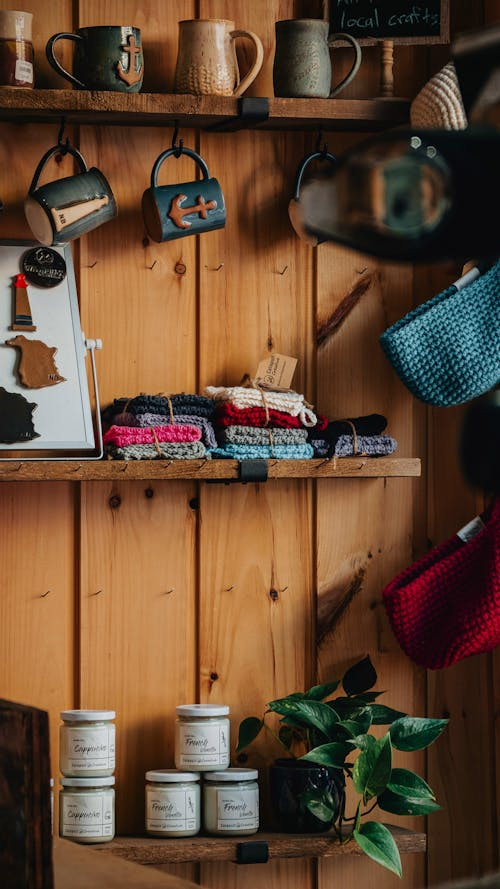
You built something with your own hands. You turned a passion into a product. And now the IRS wants to know exactly what kind of business you are running so they can put your tax return in the right box.
That box has a name. It is called a NAICS code, which stands for North American Industry Classification System. It is a six-digit number that goes right at the top of your Schedule C, and picking the wrong one can create unnecessary problems when it is time to file.
Here is the good news: you do not need an accounting degree to figure this out. You just need to know what you make and how you sell it.
This article walks you through the most common NAICS codes for handmade businesses, tells you exactly where to enter them, and explains why getting it right is worth your time.
2026 NAICS Code Quick Reference: Common Handmade Business Types
Based on NAICS 2022 Edition (IRS-adopted) | Schedule C, Box B
Business Type | NAICS Code | Category | IRS Code Description |
Candle Making | 339999 | Manufacturing | Other Miscellaneous Manufacturing |
Jewelry Making | 339910 | Manufacturing | Jewelry & Silverware Manufacturing |
Soap & Bath Products | 325611 | Manufacturing | Soap & Other Detergent Manufacturing |
Handmade Clothing / Sewing | 315280 | Manufacturing | Other Cut & Sew Apparel Mfg |
Pottery & Ceramics | 327110 | Manufacturing | Pottery, Ceramics & Plumbing Fixture Mfg |
Woodworking (Crafts) | 321999 | Manufacturing | All Other Misc. Wood Product Manufacturing |
Woodworking (Furniture) | 337122 | Manufacturing | Nonupholstered Wood Household Furniture Mfg |
Home Baking / Cottage Food | 311811 | Manufacturing | Retail Bakeries |
Macrame / Fiber Arts | 339999 | Manufacturing | Other Miscellaneous Manufacturing |
Stationery / Paper Crafts | 322299 | Manufacturing | All Other Converted Paper Product Mfg |
Independent Artist (fine art) | 711510 | Arts & Recreation | Independent Artists, Writers & Performers |
Craft Teaching / Classes | 611000 | Educational Services | Educational Services |
Online Craft Retail Only | 454110 | Retail Trade | Electronic Shopping & Mail-Order Houses |
Mixed / Unclear Classification | 999999 | Unclassified | Use only as last resort; consult a CPA |
(IRS Instructions for Schedule C, 2025; U.S. Census Bureau, NAICS 2022)
What Is a NAICS Code, and Why Does It Matter?
A NAICS code is a six-digit classification number used by the IRS, the U.S. Census Bureau, and other government agencies to categorize businesses by what they actually do (IRS Instructions for Schedule C, 2025).
On your Schedule C, your NAICS code goes in Box B, labeled Principal Business or Professional Activity Code. It tells the IRS what kind of business is behind the numbers you are reporting.
Here is why this matters beyond just filling in a box.
The IRS compares your return against other businesses in the same code category. If your expenses, income, and inventory do not line up with what is typical for your code, your return can look like an outlier. Outliers attract closer scrutiny (IRS Publication 334, Tax Guide for Small Business, 2025).
"Plain English insight you can actually act on is more valuable than any report you will never read." The NAICS code is not just a technicality. It is data the IRS uses to benchmark your business against others like it. Getting it right protects you and supports your deductions.
There is also a practical benefit. When you file as a manufacturer, which is the correct classification for most handmade sellers, the IRS expects to see significant material costs on your return. That supports your ability to claim raw materials, supplies, and production costs as legitimate business expenses (IRS Instructions for Schedule C, 2025).
The Most Common NAICS Codes for Handmade Businesses
Let us go through the most common categories one by one. For each, you will see the six-digit code, what it covers, and a note about when it applies to your business.
Candle Making: Code 339999
This is the code the IRS uses for handmade candles, wax melts, and similar products. The full description is Other Miscellaneous Manufacturing, and it covers candles, costume jewelry, novelties, ornaments, and decorative items that do not fit a more specific manufacturing category (U.S. Census Bureau, NAICS 2022).
If you pour container candles, hand-dip tapers, or make wax melts and sell them, 339999 is your code. You are a manufacturer, not a retailer.
Jewelry Making: Code 339910
Handmade jewelry makers who work with metal, wire, beads, clay, or gemstones and create finished pieces from raw materials fall under 339910, Jewelry and Silverware Manufacturing (U.S. Census Bureau, NAICS 2022).
This is distinct from a jewelry store that buys finished inventory and resells it. If you are making the pieces yourself, 339910 applies.
If your revenue comes primarily from selling at a retail storefront, 458310 (Jewelry Retailers) may be the better fit. But most handmade jewelry businesses will use the manufacturing code.
Soap and Bath Products: Code 325611
Handmade soap makers, bath bomb creators, and body butter blenders fall under 325611, Soap and Other Detergent Manufacturing (U.S. Census Bureau, NAICS 2022).
This code covers cold-process soap, melt-and-pour bars, and cosmetic bath products you make from raw ingredients. If you also sell wholesale to boutiques, this code still applies because the manufacturing activity is your primary business.
Handmade Clothing and Sewn Goods: Code 315280
If you buy fabric, thread, and notions and sew them into finished garments, you are a cut-and-sew apparel manufacturer. Your code is 315280, Other Cut and Sew Apparel Manufacturing (U.S. Census Bureau, NAICS 2022).
This applies to handmade clothing, costumes, baby items, and similar sewn goods. The manufacturing classification matters here because your cost profile, lots of fabric, supplies, and labor, matches what the IRS expects for manufacturers rather than retailers.
Pottery and Ceramics: Code 327110
Handmade pottery, ceramic mugs, sculptural pieces, and handmade planters fall under 327110, Pottery, Ceramics, and Plumbing Fixture Manufacturing (U.S. Census Bureau, NAICS 2022).
Note that some older codes in the 327 series, including 327112 and 327113, have been retired in the NAICS 2022 revision. The IRS now uses 327110 as the current code for handmade pottery. If you filed under an older code before, use 327110 going forward.
Woodworking: Code 321999 or 337122
Woodworkers have two main options depending on what they make.
321999 (All Other Miscellaneous Wood Product Manufacturing): This covers handcrafted wood items such as cutting boards, signs, serving boards, wooden toys, and decorative pieces that do not fall neatly into furniture or veneer categories.
337122 (Nonupholstered Wood Household Furniture Manufacturing): This is the better fit if you primarily build chairs, tables, shelving, or other functional furniture.
Most one-person woodworking shops selling at craft fairs or online will use 321999. If furniture is your primary product, use 337122 (U.S. Census Bureau, NAICS 2022).
Home Baking and Cottage Food: Code 311811
Cottage food producers, home bakers, and small-batch food makers filing Schedule C typically use 311811, Retail Bakeries (U.S. Census Bureau, NAICS 2022).
Note that food businesses carry additional regulatory considerations depending on your state. This code covers the IRS classification, but cottage food laws vary significantly by state and are separate from your tax filing.
Fiber Arts, Macrame, and Mixed Crafts: Code 339999
Macrame artists, knitters, crocheters, weavers, and crafters who make handmade goods that do not fit a more specific code typically use 339999, Other Miscellaneous Manufacturing (U.S. Census Bureau, NAICS 2022).
This is the practical catch-all for creative makers whose products span multiple materials and techniques.
Stationery and Paper Crafts: Code 322299
Handmade greeting cards, journals, bookbinding, and paper-based products fall under 322299, All Other Converted Paper Product Manufacturing (U.S. Census Bureau, NAICS 2022).
If your primary revenue comes from personalized stationery, handmade cards, or paper goods you produce yourself, this is your code.
Fine Art and Independent Artists: Code 711510
If your primary income comes from creating and selling original paintings, drawings, sculptures, or other fine art, the appropriate code is 711510, Independent Artists, Writers, and Performers (IRS Instructions for Schedule C, 2025).
This code is specifically for artists whose income is derived from the creation and sale of original works. It is different from manufacturing codes and carries different IRS benchmark expectations.
Teaching Craft Classes: Code 611000
If your primary business purpose is teaching workshops or craft classes rather than making and selling goods, use 611000, Educational Services (IRS Instructions for Schedule C, 2025).
If you both make and teach, choose the code that reflects where most of your income comes from.
Manufacturing vs. Retail: The Decision That Changes Everything
This is the question that trips up most handmade business owners, and it is worth spending a moment on it.
If you buy raw materials and transform them into a finished product, you are a manufacturer. Full stop.
If you buy finished goods and resell them without significant modification, you are a retailer.
Most handmade sellers are manufacturers. You buy wax and fragrance oils and make candles. You buy silver wire and gemstones and make earrings. You buy fabric and sew dresses. These are all manufacturing activities.
Why does this distinction matter so much on your tax return?
Manufacturing codes tell the IRS to expect significant material costs on your Schedule C. When your code matches your actual activity, your cost of goods sold, the raw materials and supplies it takes to make your products, is treated as a natural and expected part of your return (IRS Publication 334, 2025).
Using a retail code when you are actually manufacturing creates a mismatch. Your costs do not look right for the industry bucket the IRS put you in. That is the kind of thing that invites a closer look at your return (IRS Instructions for Schedule C, 2025).
You built something real. Your financial foundation should be just as solid as everything else you have worked for. Choosing the right NAICS code is one small part of that foundation, and it is worth getting right from day one.
Where to Enter Your Code on Schedule C
Your NAICS code goes in Box B of Schedule C (Form 1040), which is labeled Principal Business or Professional Activity Code. It is located near the top of page one of the form, just below where you enter your name and social security number (IRS Instructions for Schedule C, 2025).
The six-digit code you enter there is the same NAICS code we have discussed throughout this article.
A few practical notes:
The complete list of codes is on pages 17 through 18 of the official IRS Instructions for Schedule C. The IRS updates this list annually, so always reference the current year instructions.
The current edition is NAICS 2022, which is what the IRS uses on 2025 tax year forms that most people are filing through April 2026 (IRS Instructions for Schedule C, 2025).
The next NAICS revision (NAICS 2027) is expected in late 2026 and will appear on tax forms starting with the 2027 tax year.
You can change your NAICS code from one year to the next without amending prior returns. The IRS treats the code as a description of your current activity (IRS Instructions for Schedule C, 2025).
Do not use code 999999 unless you genuinely cannot identify any other classification. It signals that you were unable to categorize your business, which is not a position you want to be in.
What Happens When You Pick the Wrong Code
The NAICS code on your Schedule C is not just a formality. It is one of the tools the IRS uses to compare your return against statistical norms for your industry (IRS Publication 334, 2025).
Here is a realistic picture of what can go wrong when the code does not match the business.
Your deductions get flagged. If you are a candle maker using a retail code, the IRS expects to see a cost profile typical of a retailer: low or no inventory production costs, mostly finished goods purchased for resale. But your return shows wax, fragrance oils, wicks, and jars as expenses. That mismatch can raise a flag.
You leave deductions on the table. Manufacturing codes support claiming raw materials and production supplies as cost of goods sold, which reduces your taxable income. If your code does not reflect your actual activity, you may not be structuring your deductions to your best advantage.
You file inconsistently over time. If your code changes significantly every year without a clear reason, it can make your returns look inconsistent. Consistency matters when you are building a credible business record.
None of this is meant to alarm you. The IRS does not expect perfection, and no honest mistake in code selection is going to send you to prison. But accuracy here is straightforward, free, and in your interest. There is no reason not to get it right.
Profit First and Your NAICS Code: The Connection You Should Know
At Benchmark Ledger Solutions, we operate on the Profit First philosophy, the idea that profit is not what is left over after expenses. It is a priority built into the structure of your business from the beginning.
Your NAICS code ties directly into this.
When you use the correct manufacturing code, your Schedule C is structured to reflect the true cost of producing your goods. That means your cost of goods sold is captured accurately, your gross profit is calculated correctly, and your net profit is a real number that actually tells you how your business is doing.
A handmade business owner who uses the wrong code and underreports material costs does not have a clearer picture of their finances. They have a murkier one. And murkiness is the enemy of profit.
"Profit is a big reason you started your business, and we make it a priority." That starts with accurate financial foundations, and your NAICS code is one of them.
When your code, your bookkeeping, and your Schedule C all tell the same honest story about your business, you get clarity. And clarity is what lets you make smart decisions about pricing, inventory, and growth.
A Note on Multiple Business Activities
If you run more than one type of business, you need a separate Schedule C for each distinct activity. Each Schedule C will have its own NAICS code (IRS Instructions for Schedule C, 2025).
For example, if you make and sell jewelry but also teach jewelry-making workshops, you would file one Schedule C for the manufacturing activity (339910) and a separate one for the educational activity (611000).
The code should always reflect the activity that generates the income being reported on that particular Schedule C, not your overall business identity.
Three Common Mistakes Handmade Business Owners Make
1. Using an outdated code. NAICS codes are revised every five years. Some codes from 2012 or 2017 are no longer valid. Always reference the current IRS Schedule C instructions for the most up-to-date list (U.S. Census Bureau, NAICS 2022).
2. Choosing a retail code when you are a manufacturer. As we covered earlier, this is the most common error for handmade sellers. If you make your products from raw materials, you are a manufacturer. Use the manufacturing code (IRS Instructions for Schedule C, 2025).
3. Defaulting to 999999. This is the unclassified catch-all. The IRS has noted that using 999999 can attract additional scrutiny because it signals that the filer could not determine their primary activity. In almost every case, a more specific code exists and should be used (IRS Instructions for Schedule C, 2025).
Work With an Accountant Who Gets What You Do
Your handmade business deserves accounting that treats it like the real business it is.
At Benchmark Ledger Solutions, we specialize in working with small and creative businesses. We speak plain English, not accounting jargon. We help you understand your numbers, not just compile them. And we build your financial systems around the Profit First philosophy, so your business is designed to pay you first, not last.
Questions about your NAICS code, your Schedule C, or how to set up your books as a handmade business owner? We are here for exactly that conversation.
Reach out to Benchmark Ledger Solutions today.
Your profit, first. Always.
Sources
The information in this article draws from the following official and peer-reviewed sources. Always reference the most current IRS instructions for your filing year, as codes and rules are updated annually.
Source | Link |
IRS Instructions for Schedule C (Form 1040) | |
U.S. Census Bureau, NAICS 2022 Manual | |
IRS.gov, Principal Business Activity Codes | |
U.S. Small Business Administration, NAICS Codes | |
IRS Publication 334: Tax Guide for Small Business | |
U.S. Census Bureau, Economic Census Classifications |
Disclaimer: This article is intended for general educational purposes only. It does not constitute legal or tax advice. Tax laws and NAICS classifications are subject to change. Please consult a qualified tax professional regarding your specific business situation.



Comments